
Customer-facing interactions often shape how a brand is perceived, but the systems working behind the scenes play an equal role in delivering consistent service. When it comes to customer experience vs back office investment, businesses must recognize that front-end success depends on strong back-end operations. Processes such as data management, order processing, billing, and internal support directly affect response times, accuracy, and service quality. Optimizing these processes contributes to overall operational efficiency in business, ensuring smoother operations and improved outcomes.
As customer expectations increase, many organizations turn to back office outsourcing services to strengthen back-office functions without overloading internal teams. This balanced approach helps ensure that customer-facing teams are supported by efficient operations, allowing businesses to improve service delivery while maintaining control over costs and scalability. A customer-centric business strategy considers both front-end and back-end operations as critical components of service excellence.
Customer Experience vs Back Office Investment
Understanding Back Office Functions
Back-office operations may work behind the scenes, but they have a direct impact on the client experience. Delays, errors, or gaps in backend work often surface at the front end. Back-office outsourcing means assigning internal support functions such as data handling, finance, HR, and IT to external service providers. Businesses choose this model to improve efficiency, control costs, access skilled teams, and support growth.
These external teams work as an extension of the business. They handle routine and complex administrative work while the internal team focuses on customer service and revenue-related activities. This setup helps maintain consistency and operational control.
Key Outcomes of Back-office Outsourcing
- Improved efficiency and focus: Outsourcing reduces internal workload and helps teams focus on core business areas such as client engagement and sales.
- Access to specialized expertise: Service providers bring trained professionals who manage complex tasks accurately and follow defined processes.
- Better adaptability: Outsourcing partners use updated tools and systems, helping businesses keep pace with process and technology changes.
Core Components of Back-office Operations
Back-office functions support daily business activities and ensure smooth operations.
- Data management: This includes data entry, processing, storage, and security. Accurate data supports reporting and decision-making.
- Finance and accounting: Tasks include billing, payroll, reconciliations, and budget tracking. Outsourcing helps manage these processes with consistency and compliance.
- Human resources: HR services cover hiring support, employee records, training coordination, and compliance management.
- IT services: IT support includes system maintenance, software management, and data security to keep operations running without interruption.
- Administrative support: These tasks include scheduling, email handling, and document management that support daily workflows.
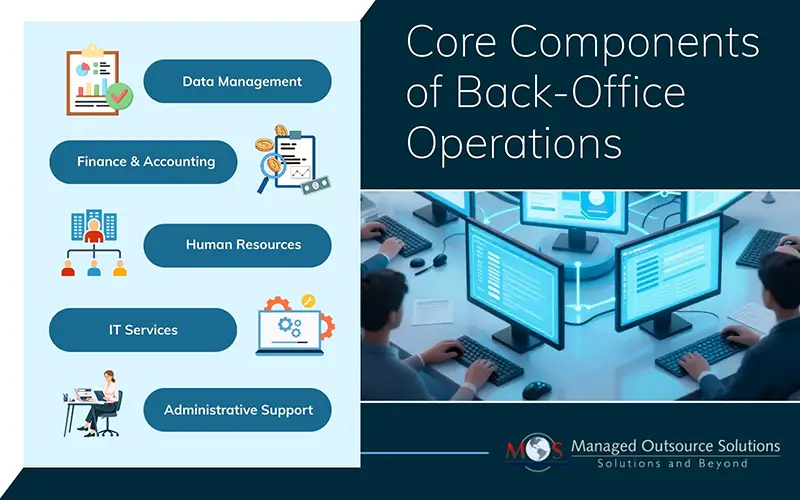
Strong back-office operations create a stable foundation. When these functions run smoothly, customer-facing teams can deliver consistent and reliable service.
What Is Customer Experience (CX)?
Understanding client experience and customer centricity helps businesses build long-term relationships. Customer experience focuses on how customers interact with a brand at each stage.
Client experience includes every interaction a customer has with a business. This starts from the first contact and continues through purchase and after-sales support. The goal is to ensure each interaction is clear, consistent, and easy for the customer.
Key Elements of Customer Experience
- Customer touchpoints: These include all interactions such as visiting a website, speaking with support teams, placing an order, or receiving a product.
- Consistency across channels: Customers expect the same level of service and accuracy across all touchpoints. Consistent experiences build trust and reliability.
- Customer feedback and improvement: Gathering feedback helps businesses identify gaps and improve processes. Acting on feedback leads to better service outcomes.
Research from Deloitte shows that customer-focused companies are 60% more profitable than those that do not prioritize client experience. This highlights the value of aligning operations, services, and support around client expectations at every stage of the journey.
Customer Experience and Back Office Strategy for Business Growth
Back office operations directly affect how customers experience a business, even though they work behind the scenes. When internal processes run smoothly, customer-facing teams can respond faster and with fewer errors. This connection makes backend efficiency a key factor in customer satisfaction.
Strong data management allows teams to access accurate customer information quickly. Efficient finance operations support timely billing and payments. Together, these functions help reduce delays, errors, and service gaps that customers notice.
Key Links between Back Office Operations and Customer Experience
- Faster issue resolution: Efficient data systems and IT support help teams resolve customer questions and problems quickly, reducing wait times.
- Accurate and timely service delivery: Streamlined finance and operations processes support on-time payments, order fulfillment, and service updates.
- Consistent service quality: Well-managed back office workflows create stability, which helps maintain consistent customer interactions and builds trust.
These outcomes are driven by structured internal processes. Predictive data systems, proactive issue tracking, and back office automation help prevent problems before they reach customers. When backend operations function efficiently, improvements in customer satisfaction follow naturally.
Improving Customer Experience through Back Office Optimization
Backend operations affect the customer journey in indirect but important ways. While customers may not see these processes, they feel the results through speed, accuracy, and service quality. Studies show that customers are more likely to stay loyal to businesses that deliver consistent and error-free service, highlighting the role of strong internal operations.
Here are key touchpoints where back office efficiency influences customer experience:
- Order Processing: Accurate data management and reliable IT systems help process orders faster. This reduces delivery time and improves customer satisfaction.
- Customer Support: HR-led training and internal support equip service teams with the right knowledge. Well-prepared staff resolve issues faster and communicate clearly with customers.
- Billing and Payments: Organized finance processes ensure correct invoices and smooth payment handling. This reduces disputes and builds customer trust.
- Returns and Refunds: A structured back office handles returns and refunds without delays. Even when issues arise, customers leave with a positive impression.
- Feedback and Complaint Handling: Efficient data processing allows teams to track and respond to feedback quickly. Customers feel acknowledged when concerns are addressed on time.
These touchpoints show how backend functions support the customer journey at every stage. When internal processes run well, businesses deliver reliable service, improve satisfaction, and foster long-term customer relationships.
AI Improves Back Office Outsourcing and Customer Experience
AI is reshaping back office outsourcing by making everyday operations faster, more accurate, and more reliable. Through automation, AI handles repetitive tasks such as data entry, transaction processing, and document review with minimal errors. Machine learning tools help analyze large volumes of data, allowing teams to spot issues early and improve decision-making.
As back-office workflows become more efficient, customer-facing teams receive timely and accurate information. This leads to quicker responses, fewer service delays, and smoother interactions for customers. AI also strengthens data security and supports compliance, which builds customer trust. By improving back-end efficiency, AI-driven outsourcing directly contributes to a better and more consistent customer experience.
Customer experience and back-office efficiency are closely connected. When internal operations are accurate, timely, and well managed, customer-facing teams can deliver better service with fewer delays and errors. With the support of providers offering outsourcing services, businesses can strengthen back-office functions, improve consistency, and support customer experience goals without adding internal strain. This balanced approach helps organizations scale operations, control costs, and maintain reliable service quality over time.