
Every business generates data. These data can be numbers, images, words, figures, facts or ideas collected from a variety of sources including surveys, interviews and focus groups or other methods for reference or analysis. Organizations require clean, well-structured data to uncover patterns and make informed decisions. Data manipulation for data mining and analytics plays a critical role in transforming raw information into meaningful insights that drive business strategy and performance. Without accurate preparation, even the most advanced analytical tools can produce unreliable results.
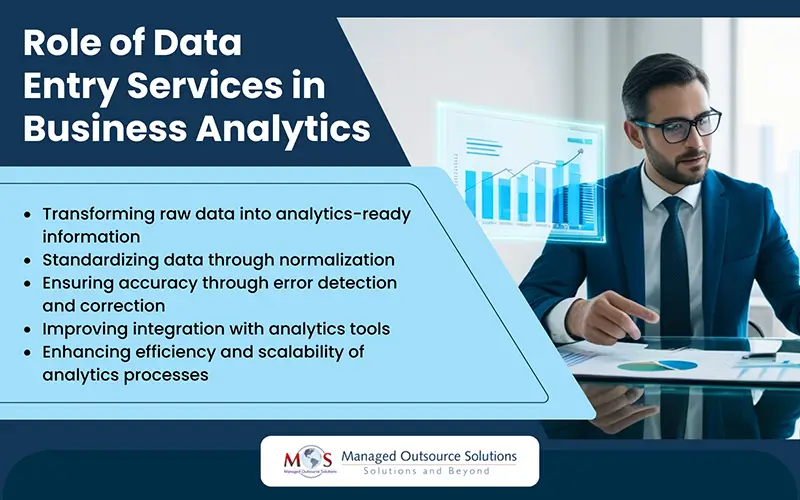
This is where the expertise of a professional data entry company becomes valuable. By ensuring data is consistently captured, validated, and formatted at the source, businesses can streamline downstream processes and improve the accuracy of their analytics. By enhancing data quality, effective data manipulation enables analysts to work faster, reduce errors, and extract insights with greater confidence.
Understanding Data Manipulation for Data Mining and Analytics
Data manipulation is a critical step that bridges raw data collection and meaningful analysis. Before data can be explored for patterns, trends, or predictions, it must be extracted, structured, and prepared in a format that analytics tools can interpret accurately. This process involves working with data stored across multiple sources such as spreadsheets, databases, PDFs, and web forms, ensuring consistency and usability throughout the dataset.
In modern analytics environments, data manipulation supports big data processing, where large volumes of structured and unstructured data are handled at scale. Techniques such as sorting, filtering, aggregating, and transforming data help organizations manage complexity while maintaining performance. Advanced technologies like Optical Character Recognition (OCR) and Intelligent Character Recognition (ICR) further enhance the speed and accuracy of extracting information from scanned documents and digital files, enabling faster data readiness for analysis.
Another key objective of data manipulation is improving data quality for analytics and mining. Clean, well-organized data reduces errors, eliminates duplicates, and ensures that insights generated from analytics are reliable and actionable. Activities such as reformatting datasets, validating entries, and standardizing data fields allow analysts to work efficiently without altering the original meaning of the data. When data quality is consistently maintained, businesses can make informed decisions, optimize operations, and gain deeper insights from their data mining and analytics efforts.
Tips to Improve Data Manipulation for Data Mining and Analytics
Microsoft Excel (MS Excel) is a powerful tool for collecting and manipulating data. It allows you to perform almost any level of data manipulation and analysis and supports essential data preprocessing techniques used before advanced analytics. The following tips help improve the data manipulation in Excel.
- Pivot Tables – PivotTables can summarize, analyze, explore, and present the data. It is easy to create them with just a few clicks. They are highly flexible and can be quickly adjusted depending on how the user needs to display the results. To create a Pivot Table, it is essential to make sure that the data has column headings or table headers and there are no blank rows.
- Conditional Formatting – Conditional formatting helps change the formatting of a cell depending on the content of the cell, or a range of cells, or another cell or cells in the workbook. This powerful feature can apply basic font and cell formatting such as number format, font color and other font attributes, cell borders and cell fill color. There is also a range of graphical conditional formats that helps with visualizing data by using icon sets, color scales, or data bars.
- Sorting and Filtering – This feature helps save time and makes the spreadsheet more effective, especially when applying data transformation methods to organize large datasets for analysis.
- Basic Math Functions – Basic math functions help manipulate the numbers within the data. It is one of the features that make MS Excel so powerful. In Excel, simple calculations can be entered into the formula bar just as they would be written on paper.
- Mixed Type Charts – Mixed type or combo charts help combine two styles of charts, such as Excel’s column chart and line chart. This format is beneficial for displaying two different types of information or a range of values that varies greatly.
- Splitting cells in Excel – You can improve data manipulation by splitting cells in MS Excel. If you have unnecessary data in the same cell, then you can split the data into two or more cells and remove the cells with unnecessary data or just keep them separated.
MS Excel is the commonly used program for data collection, especially when it comes to numerical data. The analysis can be made quicker and easier when you organize your data in tables and charts. Excel has a wide variety of advanced options that can help you with data manipulation and preparation.
- Embedding Excel spreadsheet in PowerPoint – Microsoft PowerPoint is very useful, particularly for business meetings and presenting data. PowerPoint allows you to present data in a visually engaging way and also summarize the data. It also lets you add details in the presentation in the form of an Excel spreadsheet. This method of data organization will help cover both summarized and visualized data as well as detailed information in the form of tables. The significant feature is that when you embed an Excel chart in PowerPoint, any updates you make to the original Excel chart will automatically update in your presentation.
- Splitting and Merging Documents – Another method is combining data from different files. It is possible to merge and split files with the help of the right tools. Data can be organized by putting together all the data from one category or topic in one document. The data collection process is completed by merging two or more files. In order to get rid of unnecessary pages of a merged file, it is essential to split documents. This is efficient as you can have everything in one place and remove the parts that do not fall in the same data category, while still keeping split pages in separate files for future use.
Businesses looking to leverage large volume data can consider leveraging data mining services provided by data entry outsourcing companies. Advanced AI-assisted data processing services can go a long way in helping businesses ease their data related workload and improve efficiency.