
Legal documents contain highly sensitive client information, case details, and privileged communications. As law firms transition from paper-based systems to more efficient digital workflows, legal document scanning services have become essential for digitizing records while maintaining strict data security.
Ensuring confidentiality in legal document scanning and digitization processes is critical to protecting legal records and maintaining trust, regulatory compliance, and data integrity in law firms. Today, AI is significantly transforming document security in scanning and digitization workflows by adding intelligence, automation, and advanced threat detection to processes that were once manual and vulnerable to errors.
Importance of Confidentiality in Legal Document Management
Confidentiality is the cornerstone of the legal profession. The importance of confidentiality in legal document management cannot be overstated, as even a minor breach can result in severe legal, financial, and reputational damage. Clients trust attorneys and legal professionals with their most sensitive information, expecting it to be handled with the highest level of discretion. Legal documents may include:
- Client contracts and agreements
- Litigation records
- Intellectual property documents
- Personal identification and financial data
When these documents are digitized, the risk of unauthorized access, data leaks, or cyber-attacks increases. That’s why maintaining legal data privacy during scanning and storage is essential. Failure to protect the data can lead to violations of regulatory requirements, loss of client trust, and potential lawsuits.
Best Practices to Ensure Confidentiality in Legal Document Scanning
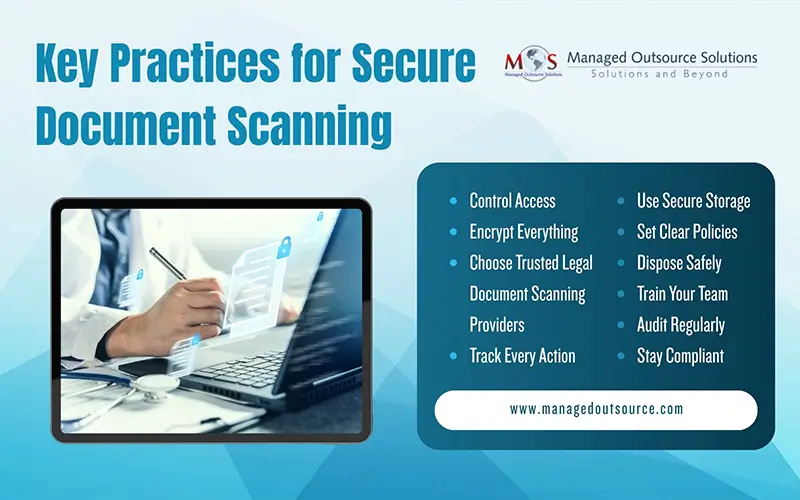
Adopting the following best practices to maintain confidentiality in legal document scanning mitigates risks of data breach:
- Implement Strict Access Controls: Limiting access to sensitive legal documents is essential to maintaining confidentiality. Only authorized personnel should be allowed to view or handle specific files based on their roles. Role-based access control helps prevent internal data misuse and accidental exposure. This ensures that sensitive client information remains protected throughout the scanning process.
- Use End-to-End Encryption: Encryption safeguards documents by converting them into unreadable formats during transfer and storage. Even if data is intercepted, it cannot be accessed without proper decryption keys. This is crucial for maintaining legal data privacy and preventing cyber threats. End-to-end encryption ensures complete protection from the point of scanning to final storage.
- Maintain Audit Trails: Audit trails provide a detailed record of who accessed, modified, or shared a document. This transparency helps identify suspicious activities and ensures accountability among staff. In case of a security incident, audit logs can be used for investigation. They are also important for meeting compliance requirements.
- Use Secure Document Storage Solutions: Storing scanned documents in secure environments protects them from unauthorized access and cyber-attacks. Cloud platforms or on-premise systems should include encryption, multi-factor authentication, and backup features. This ensures documents remain safe and accessible only to authorized users. Proper storage is vital for long-term legal document management.
- Establish Clear Document Handling Policies: Organizations should define clear procedures for handling, scanning, and storing legal documents. These policies ensure consistency and reduce the chances of human error. Employees must be trained to strictly follow these guidelines.
- Ensure Secure Disposal of Physical Documents: After digitization, physical documents must be handled carefully to prevent data leaks. Sensitive material should be shredded or securely archived based on legal requirements. Improper disposal can expose confidential information to unauthorized parties. Secure disposal is a critical step in the document lifecycle.
- Provide Regular Security Training for Staff: Employees play a major role in maintaining data security. Regular training helps them understand potential risks like phishing, data leaks, and improper handling. It also reinforces best practices for confidentiality in legal document scanning. Well-informed staff significantly reduce the chances of human error.
- Conduct Routine Security Audits: Regular audits help identify vulnerabilities in document scanning and storage systems. These assessments ensure that security measures are functioning effectively. Addressing gaps proactively reduces the risk of data breaches. Audits also help maintain compliance with legal and regulatory standards.
- Compliance with Legal and Regulatory Standards: Adhering to laws and regulations is essential for protecting sensitive legal data and strengthening trust. Compliance frameworks ensure proper handling, storage, and sharing o information, supporting long-term legal data protection. Failure to comply can lead to penalties and reputational damage.
- Outsource to Professional Legal Document Scanning Services: Choosing a reliable document scanning company is key to protecting sensitive legal data. Leading companies comply with industry regulations and have strict security protocols in place, including secure facilities and trained staff. This reduces the risk of breaches during document digitization.
The Future of Data Protection in the Legal Industry
As technology continues to evolve, so do the methods used by cybercriminals. The future of data protection in the legal industry will rely heavily on advanced technologies such as:
- Artificial Intelligence for Threat Detection: AI will play a major role in identifying unusual patterns and potential security threats in real time. It helps legal firms respond faster to cyber risks and prevent data breaches before they occur.
- Zero-Trust Security Frameworks: The zero-trust model assumes that no user or system is automatically trusted, even within the network. Every access request is verified, reducing the risk of internal and external security threats.
- Blockchain Technology for Secure Document Management: Blockchain technology can create tamper-proof records of legal documents and transactions. This ensures transparency, authenticity, and enhanced security for sensitive legal data.
- Advanced Encryption Technologies: Future encryption methods will become more sophisticated, offering stronger protection for data at rest and in transit. This will be essential for maintaining legal data privacy in evolving digital environments.
- Cloud Security Enhancements: As more legal firms move to cloud-based systems, providers will continue improving security features like multi-factor authentication and advanced monitoring. This ensures safer storage and access to digital legal records.
- Regulatory Evolution and Compliance Automation: Data protection laws will continue to evolve, requiring legal firms to stay updated. Automated compliance tools will help organizations meet regulatory requirements more efficiently and accurately.
- Increased Focus on Employee Awareness: Human error remains a major risk, so ongoing cyber security training will become more critical. Educated staff can better recognize threats and follow secure data handling practices.
- Integration of Secure Remote Work Solutions: With remote work becoming standard, secure access to legal documents will be a priority. Technologies like VPNs and secure collaboration tools will ensure data remains protected outside office environments.
Legal organizations must stay proactive and continuously update their security strategies to address emerging threats. Maintaining legal data privacy will remain a top priority as digital transformation accelerates.
By recognizing the importance of confidentiality in legal document management and addressing potential risks, law firms can safeguard sensitive information while benefiting from digital workflows. As the legal industry continues to embrace digital transformation, investing in secure legal document scanning services is essential. Technology-first companies prioritize AI to strengthen document security in scanning workflows, enabling automated detection of sensitive information, intelligent redaction, anomaly monitoring, and compliance enforcement. These capabilities help law firms digitize documents safely while maintaining strict control over confidential data. Leading service providers implement best practices to ensure data security and confidentiality in legal document scanning, enabling law firms to remain compliant throughout the digitization process.
Discover how legal document scanning services can enhance security and compliance.