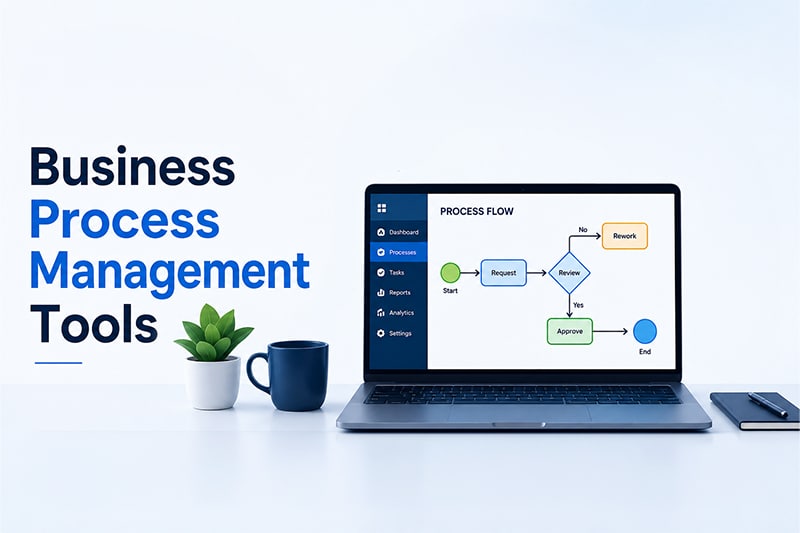
Modern enterprises operate in environments defined by increasing transaction volumes, fragmented workflows, and growing compliance demands. Departments that once operated in silos now depend on synchronized execution across finance, human resources, customer service, procurement, and regulatory functions. In this landscape, business process management tools have evolved from simple workflow automation utilities into AI-assisted operational frameworks capable of orchestrating complex, multi-stage processes with precision.
Operational leaders face mounting pressure to sustain productivity while maintaining compliance and responsiveness. Rising process volumes, distributed teams, and shortened turnaround expectations create systemic friction that manual coordination cannot resolve efficiently. AI-driven process intelligence now reshapes how workflows are designed, executed, and refined. Decision logic embedded within modern BPM platforms supports faster approvals, consistent task routing, and improved operational transparency across departments.
This blog presents six widely used tools that are redefining process management environments and shaping modern digital transformation strategies.
Transform workflow efficiency now.
Partner with experts in business process automation and optimization.
Call: (800) 670-2809
Top Business Process Management Tools in Use
- Appian
Organizations pursuing rapid modernization adopt Appian for its low-code architecture and enterprise-grade orchestration capabilities.
The platform transforms workflow management by enabling operational teams to design and deploy process models without extensive software development cycles.
The platform enables teams to design and deploy workflows quickly, without extensive development cycles. It is particularly effective in environments where multiple departments interact through shared processes such as finance approvals, compliance documentation, and service management.
AI-assisted document classification capabilities streamline high-volume intake processes, particularly in compliance-heavy industries. AI-driven analytics integrated within the platform monitor execution patterns and highlight performance deviations, supporting organizations and business process outsourcing companies that operate high-volume workflows across global delivery units.
Key strengths include:
- Centralized case management for improved visibility
- AI-assisted document classification capabilities for high-volume intake
- AI-driven analytics to monitor execution patterns
Appian supports both enterprises and business process outsourcing companies managing large-scale workflows across global operations. Its structured approach enhances transparency, accountability, and scalability.
- Pega Platform
The Pega Platform stands out for its decision-centric workflow model powered by AI-driven decision engines.
Unlike traditional systems, Pega dynamically adapts workflows based on real-time inputs such as user behavior, compliance rules, and service priorities.
Key capabilities include:
- Adaptive case lifecycle management
AI-enabled decision models within the platform analyze historical interactions to recommend workflow paths aligned with performance objectives. For example, service requests routed through Pega environments can automatically prioritize urgent cases based on risk indicators or customer value metrics.
- Real-time workflow optimization
Organizations operating within telecommunications, insurance, and banking sectors frequently deploy Pega to manage customer-centric workflows that demand continuous monitoring and rapid resolution.
- Integrated compliance governance with automated audit trails
Pega integrates rule-based policy frameworks that support regulatory adherence without requiring manual verification at every stage. Automated audit trails maintain comprehensive records of workflow decisions, supporting both internal oversight and external audits.
- Bizagi
Bizagi offers a comprehensive environment for modeling, automating, and optimizing workflows.
Its visual modeling tools enable organizations to design and simulate processes before deployment—reducing risk and improving efficiency.
Core features include:
- Process simulation and performance testing
- AI-assisted analytics to identify bottlenecks
- Seamless integration across enterprise systems
By evaluating alternative configurations, organizations can reduce deployment risk associated with untested process changes.
Evaluates execution data across workflow cycles. Performance indicators such as task duration and exception frequency guide optimization strategies.
Synchronizes data flow across departments to reduce redundancy and improve coordination accuracy.
Bizagi supports organizations focused on continuous improvement and data-driven decision-making, especially in logistics and manufacturing environments.
- Nintex
Nintex is widely used for managing document-intensive workflows.
It transforms manual approval processes into structured, automated workflows, improving both speed and accuracy.
Key advantages include:
- End-to-end document lifecycle management from intake and approval to archival and retention.
- AI-assisted form recognition for data capture
- Strong integration with enterprise collaboration platforms
Enterprises handling procurement approvals, contract management, and compliance documentation benefit from automated routing frameworks that maintain consistent execution standards.
Enterprises handling procurement approvals, contract management, and compliance documentation benefit from automated routing frameworks that maintain consistent execution standards.
Supports workflow synchronization across business functions, reducing delays caused by disconnected systems. Decision triggers embedded within workflows initiate automated escalation when deadlines approach or predefined conditions are met. Operational visibility improves through centralized dashboards that track task completion rates and process duration metrics.
Industries managing contract approvals, regulatory submissions, and vendor onboarding operations benefit from Nintex’s ability to maintain consistent documentation governance.
- Kissflow
Kissflow is a cloud-native platform designed for organizations seeking flexible and scalable workflow automation.
It enables rapid digital transformation by converting manual processes into structured, trackable workflows.
Organizations using Kissflow convert repetitive administrative tasks into structured digital processes accessible through centralized dashboards.
Key features include:
- AI-driven task routing and prioritization
- Centralized dashboards for workflow visibility
- Customizable templates for cross-functional processes
Kissflow reflects the growing role of AI in business process outsourcing, helping organizations maintain efficiency and consistency at scale.
Small and mid-sized enterprises, along with growing operational units within larger organizations, frequently adopt Kissflow due to its cloud-first architecture and rapid deployment capabilities.
Through its emphasis on accessible workflow design and centralized coordination, Kissflow strengthens process governance across organizations seeking efficient digital transformation pathways.
- Zoho Creator
Zoho Creator supports organizations that require highly customizable workflow applications. Its low-code environment enables rapid development of tailored solutions aligned with specific operational needs.
Key capabilities include:
- Custom workflow application development
- AI-enabled automation and conditional logic
- Seamless data integration across systems
Enterprises design process-specific tools such as inventory tracking systems, approval workflows, and service management platforms using visual development components.
AI-enabled automation features assist in managing repetitive decision points within workflows. Conditional logic embedded within applications supports dynamic task routing based on real-time data inputs.
This connectivity reduces duplication errors and supports consistent record management.
Organizations operating in sectors such as retail operations, logistics coordination, and administrative services benefit from Zoho Creator’s adaptability.
Zoho Creator is ideal for organizations seeking flexibility, scalability, and continuous process evolution.
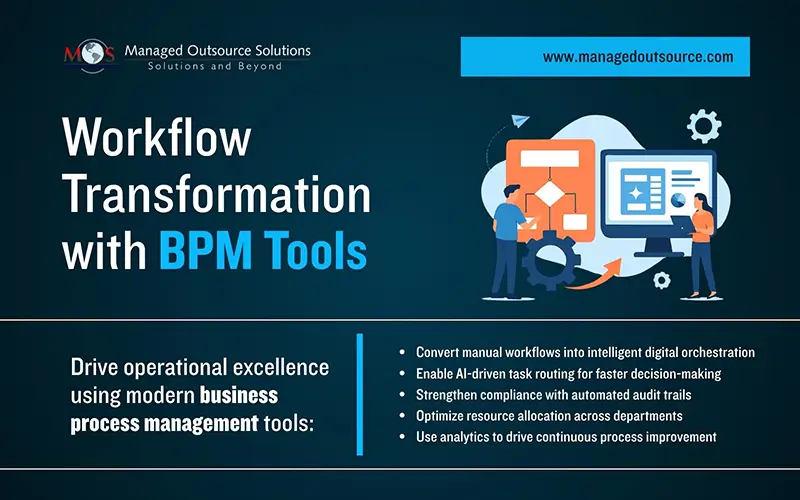
Implementation Challenges and Strategic Considerations
Adopting business process management tools requires careful planning to ensure long-term success.
Legacy System Integration
Many organizations operate on outdated systems that may not integrate easily with modern BPM platforms. Strategic planning is essential to avoid disruptions.
Organizational Change Management
Transitioning from manual workflows to automated systems can face resistance. Training and communication are key to successful adoption.
Data Governance Requirements
Accurate and standardized data is very important. Organizations must ensure consistent data management practices.
Vendor Selection Strategy
Choosing the right platform requires evaluating scalability, integration capabilities, and vendor reliability to avoid long-term limitations.
Modern BPM Platforms Driving Long-term Business Efficiency
Today, business success depends on coordinated workflows that adapt to changing demands.
Modern business process management tools have become essential infrastructure—supporting efficiency, compliance, and operational transparency.
Platforms such as Appian, Pega Platform, Bizagi, Nintex, Kissflow, and Zoho Creator demonstrate how organizations can transform routine workflows into measurable, scalable systems.
Organizations that leverage AI in Business Process Outsourcing and advanced BPM platforms gain clear advantages:
- Improved efficiency
- Greater accountability
- Enhanced scalability
As operational complexity grows, business process management ecosystems will continue to play a central role in enabling reliable, future-ready business processes.