Commercial vehicles produce large amounts of data every day through sensors, GPS systems, and engine information. The real question is not whether your fleet collects data. It’s whether you use that data to make better choices. That’s where data mining in fleet management comes in.
Fleet managers face several challenges. They need to cut costs, keep everyone safe, and run things smoothly. The traditional ways of doing things, like checking vehicles manually and fixing problems after they happen, don’t work anymore. Leading companies using a new approach — they are leveraging data mining to convert raw information into useful knowledge that helps them make better decisions.
Data mining reveals valuable trends that would otherwise go unnoticed. By analyzing vehicle performance, driver habits, fuel usage, and maintenance data, fleet managers gain actionable insights that improve efficiency, reduce costs, and optimize overall fleet performance.
What Data Mining in Fleet Management Means
Data mining in fleet management means collecting information, putting it together, and studying it to find patterns that drive smart choices. It’s different from just generating simple reports. Data mining uses special methods to pull out important information from large volumes of complex data. Once fleet managers understand these patterns, they can use them to work better, spend less money, and make driving safer.
The first step is data collection. Telematics tools monitor where your vehicles go, how fast they travel, how much fuel they use, and how their engines are running. Driver logs show how long people work and how they drive. Maintenance records show what got fixed and when.
Next, fleet management software takes all this raw information and puts it into charts, graphs, tables, and reports that are easy to understand. This provides a clear idea about how the fleet is doing. Using advanced tools to analyze this data reveals trends that significantly impact business results.
How Analytics Transforms Fleet Management
Predictive analytics has become the most important part of modern fleet management. Instead of waiting for vehicles to break down, managers can now predict when they will need fixing. Computer programs analyze engine codes, wear on parts, vibration signals, and fluid levels. This new approach helps fix vehicles before they break instead of fixing them after. It also prevents sudden breakdowns and reduces spending on emergency repairs.
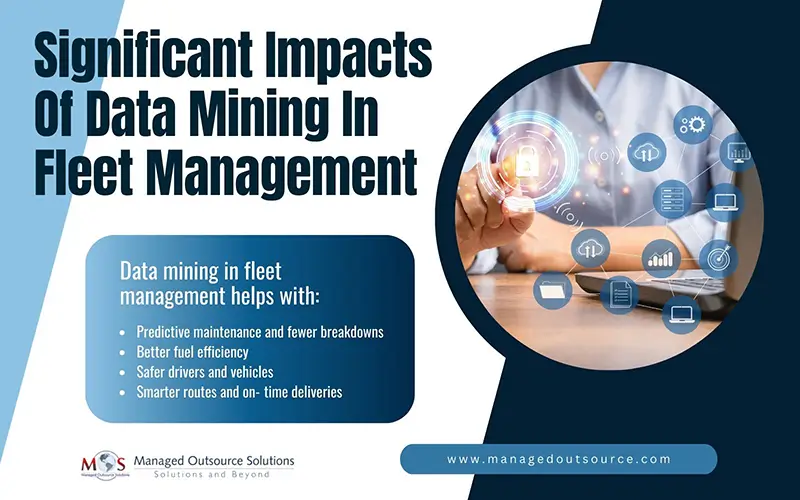
Data mining also helps with driver behavior analytics. Special systems watch how drivers accelerate, brake, turn, and let engines idle. When data mining shows that hard braking is wearing out brake pads too fast, fleet managers can talk to that driver and help them improve. Companies that use this system have cut speeding by 60% and dangerous driving by 50%. This means fewer crashes, cheaper insurance, and less damage to vehicles.
Route optimization uses GPS, traffic data, delivery demands, and vehicle capacity to create efficient routes automatically. This helps fleets reduce fuel costs by 15–25% and improve on-time delivery rates.
Real-World Fleet Success Stories
Many companies across different industries have seen real improvements using these methods.
A truck company in Phoenix had higher fuel costs and late deliveries. After adding GPS tracking and fuel use tracking to their system, fuel costs dropped by 15%. On-time deliveries went up by 10%. The company quickly got back the money it invested.
A construction company in Arizona had safety issues. Their fleet system used driver behavior analytics to track speeding, hard braking, and too much idling. They trained drivers who had poor habits and gave rewards to safe drivers. Crashes went down by 20%. Driver safety scores got 15% better. The company paid less for insurance and created a safer working environment.
How Telematics Powers Fleet Insights
Telematics technology is the foundation of modern fleet insights. These systems collect live information from vehicles, creating a steady stream of data. Unlike checking vehicles manually once in a while, telematics watches how your fleet runs every single second.
Telematics systems track critical metrics such as vehicle location, speed, driving behavior, fuel usage, and engine performance. This real-time data powers predictive analytics that detect problems early and prevent costly breakdowns. Machine learning models analyze historical trends to identify warning signs of equipment failure.
By integrating IoT data with machine learning, fleet management systems continuously improve. With each new data point, prediction accuracy increases, enabling smarter decisions and stronger long-term performance.
Addressing Maintenance with Data-Driven Insights
A vehicle that sits idle might not need service at its set time while a heavily used vehicle might need service sooner.
Traditional fleet maintenance follows fixed service intervals, regardless of vehicle condition. This results in unnecessary servicing for some vehicles and delayed maintenance for others, increasing operational inefficiencies.
Data mining changes the way maintenance is handled. By tracking oil pressure, tire wear, battery power, and brake wear, fleet managers only schedule service when the vehicle actually needs it. This approach saves money by directing resources where they count the most. Data mining improves vehicle maintenance scheduling the same way for small local fleets and large regional ones.
Improving Fuel Efficiency Through Analytics
Fuel is one of the largest operating expenses in fleet management—and one of the few costs that can be effectively controlled. Data mining helps identify fuel-saving opportunities that would otherwise remain hidden, enabling fleets to reduce waste and improve efficiency.
Using telematics data for fuel consumption optimization involves looking at many factors at the same time. Factors like the route taken, how the driver behaves, the amount of load carried, traffic, and even weather change the amount of fuel consumed. When data mining systems look at all these aspects together, they find the best routes and the best ways to drive.
Unnecessary engine idling is a common behavior that data mining can easily identify. Studies show that an idling engine can consume up to half a gallon of fuel per hour, depending on engine type. When telematics systems monitor idling patterns across an entire fleet, managers can detect inefficiencies and implement policies to reduce unnecessary engine runtime.
Similarly, heavy traffic conditions and inefficient route selection significantly increase fuel consumption. Fleet analytics helps minimize these issues by identifying optimal routing strategies and traffic avoidance opportunities.
The Technology Behind Fleet Insights
Today’s fleet data mining uses different technologies that work together. Small sensors in vehicles gather steady streams of data and send this information to cloud platforms, where advanced programs study it. Machine learning models find patterns, generate predictions, and send alerts.
Artificial intelligence powers top fleet management systems. AI programs can study engine codes, vibration patterns, temperature changes, fluid levels, and component age to predict failure. These systems learn from new information continuously and get better. Instead of warning about every small change, AI systems figure out which vehicles will cause critical problems, so workers can use their time on the most important fixes.
Live information sharing lets fleet managers make choices based on current conditions. When a traffic accident happens, GPS sees the delay right away and tells drivers to take a different route. When a vehicle starts to vibrate in an unusual way, the system alerts repair workers before the engine breaks down. This quick response stops many problems from becoming very costly later.
Outsourced Solutions: The Benefits of Professional Support
Most fleet companies have staff familiar with the latest technologies, but hiring professional data mining services can provide distinct advantages. This would ensure end-to-end support:
- Use of top data tools and telematics systems for collecting the right information
- Turning complex information into charts, graphs, tables, and reports
- Using advanced analytical and statistical methods to extract useful information from big datasets
- Studying large volumes of fleet data to find trends and new opportunities
- Building machine learning models that improve prediction accuracy
- Constant monitoring and alerts that keep managers informed
While collecting fleet data is relatively simple, turning that data into meaningful insights requires advanced analytics and expertise. Fleet managers who prioritize data-driven decision-making gain a competitive advantage by improving efficiency, reducing costs, and optimizing performance. Partnering with professional data mining services further enhances accuracy and speed, enabling smarter and faster business outcomes.
Optimize Fleet with Management with Expert Data Mining Solutions.