Small and medium-sized businesses are entering a new phase of workforce management where traditional outsourcing alone no longer meets operational demands. Growing employee volumes, evolving regulatory requirements, and expanding administrative complexity have increased the pressure on SMBs to process information faster while maintaining accuracy. Manual workflows and fragmented systems struggle to keep pace with these demands, creating delays, compliance risks, and operational inefficiencies. In response, organizations are shifting toward AI-enabled HR and business process outsourcing (BPO) models that combine automation with intelligent data processing to improve consistency and responsiveness across operations.
Another critical shift involves the transformation of outsourcing itself. Previously viewed primarily as a cost-control mechanism, outsourcing is now evolving into an intelligence-driven operational model. AI-driven technologies enable outsourcing teams to move beyond transaction processing toward predictive analysis, anomaly detection, and workflow optimization. Platforms such as DeepKnit AI demonstrate this shift by integrating intelligent automation, data validation engines, and workflow orchestration capabilities into HR and administrative processes. These technologies strengthen accuracy and enable faster responses to workforce changes and compliance requirements.
This post examines how AI-enabled HR and business process outsourcing is redefining workforce management for small and medium-sized businesses. It shows how intelligent outsourcing models support stability, scalability, and long-term growth by streamlining operations, reducing manual work, and improving accuracy.
Simplify workforce management with AI.
Key Challenges SMBs Face in HR and Business Process Outsourcing
Small and medium-sized businesses operate in environments where workforce-related responsibilities continue to expand in both scale and complexity. Administrative workloads that once involved simple documentation now require continuous monitoring, cross-system validation, and regulatory alignment. As organizations grow, the volume of payroll entries, employee records, benefits transactions, and compliance documentation increases significantly. Managing these growing datasets manually slows operational cycles and introduces inconsistencies that affect reporting accuracy.
For SMBs navigating this shift, several operational challenges make manual management increasingly untenable.
High Transaction Volumes and Tight Deadlines
One of the most persistent challenges involves managing high transaction volumes under strict time constraints. Payroll processing, tax filings, benefits enrollment, and employee lifecycle documentation must occur within defined timelines. Missing deadlines or processing incorrect data can lead to financial penalties, employee dissatisfaction, and regulatory complications. Traditional manual workflows struggle to keep pace with these demands, especially when internal teams rely on spreadsheets and fragmented tools.
Evolving Regulatory and Compliance Demands
Another challenge stems from regulatory complexity. Labor laws, tax frameworks, and compliance requirements evolve frequently, requiring organizations to maintain accurate documentation and reporting practices. SMBs must track employee classifications, overtime calculations, statutory deductions, and audit trails while ensuring data consistency across systems. Without structured automation and validation tools, these responsibilities increase the likelihood of compliance errors and reporting delays.
Data Fragmentation and Poor System Integration
Data fragmentation further complicates operations. Many SMBs maintain employee information across multiple platforms, including payroll systems, HR databases, attendance logs, and compliance software. This separation creates synchronization challenges and reduces data visibility. Managers spend considerable time reconciling mismatched records, which delays decision-making and reduces operational efficiency.
Time Pressure on Strategic Workforce Planning
Time pressure also affects workforce planning and talent management. Recruitment cycles, onboarding workflows, and performance monitoring require continuous attention. When administrative tasks consume significant internal resources, leadership teams struggle to focus on strategic initiatives such as workforce expansion, retention planning, and productivity improvement.
The combined pressures of volume, compliance, complexity, and time sensitivity are driving SMBs to adopt AI-assisted outsourcing frameworks that automate repetitive tasks while improving operational visibility.
How AI Works in Modern HR and BPO Environments
AI‑enabled outsourcing introduces structured intelligence into routine workforce operations, analyzing patterns, validating information, and optimizing workflows in real time. These capabilities allow organizations to move from reactive processing toward proactive workforce management. This shift reflects the growing role of AI in business process outsourcing, where automation is no longer limited to task execution but extends to intelligent data interpretation and workflow optimization.
AI-assisted Payroll Processing
One of the most impactful applications involves AI-assisted payroll processing. Payroll workflows require validation of attendance records, tax deductions, benefits contributions, and statutory calculations. AI-enabled validation engines automatically cross-check payroll inputs against predefined rules and historical records. When inconsistencies occur, such as mismatched attendance hours or irregular deduction patterns, the system flags anomalies for review before final processing.
AI-driven Recruitment and Onboarding
AI-driven recruitment and onboarding workflows also transform workforce acquisition processes. Resume screening traditionally requires manual review of hundreds of applications. AI-powered systems analyze applicant data, identify relevant skills, and rank candidates based on predefined job requirements. During onboarding, AI-enabled document recognition tools verify identification records, employment forms, and compliance documents.
AI-enabled Compliance Monitoring
AI-enabled compliance monitoring strengthens regulatory reliability. Regulatory compliance requires continuous validation of employee classifications, payroll taxes, benefits eligibility, and reporting deadlines. AI systems monitor data streams across multiple systems and generate alerts when discrepancies occur.
AI-driven Workforce Analytics Dashboards
Modern outsourcing environments also incorporate AI-driven analytics dashboards that provide real-time visibility into workforce metrics. Managers review insights related to attendance patterns, overtime trends, workforce utilization, and payroll variances.
Centralized AI-enabled Outsourcing Platforms
Platforms such as DeepKnit AI support these capabilities by integrating workflow automation, data validation engines, and intelligent reporting into a unified operational environment. Instead of managing separate tools, organizations interact with centralized AI-enabled infrastructure that coordinates HR processes and generates operational insights.
AI-assisted Document and Record Management
AI-assisted document management further improves administrative efficiency by automatically categorizing and storing employee records and compliance documentation, ensuring faster retrieval and improved audit readiness.
The Role of Human Expertise in AI-enabled Outsourcing
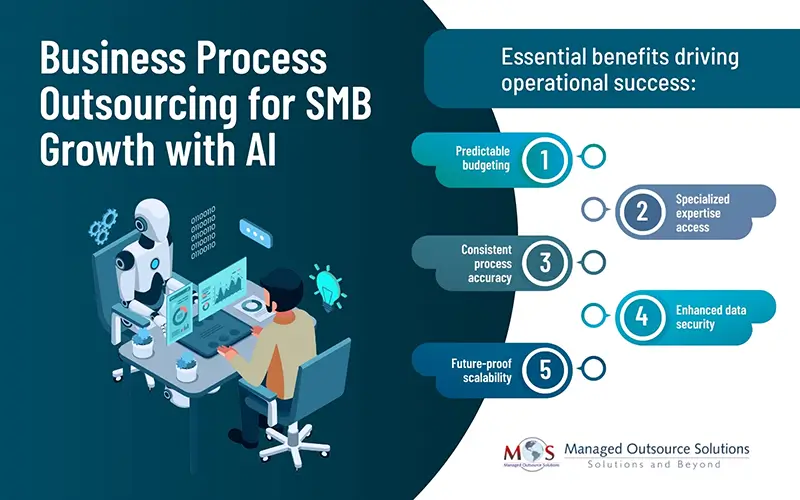
While AI-driven systems automate repetitive workflows, human expertise remains essential for maintaining operational accuracy and regulatory compliance. AI tools process large datasets efficiently, while experienced professionals interpret the results, validate exceptions, and ensure that the decisions align with organizational policies.
Exception handling represents one of the most important human responsibilities. AI-enabled systems identify anomalies such as irregular payroll entries or incomplete documentation. Human specialists review flagged records and determine appropriate corrective actions.
Human oversight strengthens compliance validation by interpreting regulatory nuances that automated systems alone cannot resolve. Compliance professionals review AI-generated reports and adjust workflows to reflect regulatory updates.
Workflow optimization also depends on human expertise. HR specialists refine automation parameters based on operational changes and workforce growth patterns. This iterative collaboration ensures continuous improvement in process efficiency.
Human interpretation of AI-generated insights supports strategic decision-making. Workforce trends identified through analytics require contextual evaluation before implementing corrective measures. This collaboration between automation and human expertise enables organizations to scale operations without sacrificing reliability.
Business Benefits of AI-driven HR and Business Process Outsourcing
AI-enabled outsourcing delivers measurable operational advantages that extend beyond traditional cost management. SMBs benefit from faster processing cycles, improved accuracy, and enhanced operational visibility. Organizations that adopt structured business process outsourcing services supported by AI-driven tools, such as AI-assisted payroll processing, AI-driven recruitment, and AI-enabled compliance monitoring, gain the ability to standardize workflows, reduce manual intervention, and maintain consistent performance across expanding workforce operations.
Faster Processing and Reduced Manual Effort
Processing speed improves significantly through AI-driven automation. Tasks such as payroll reconciliation, attendance tracking, and benefits processing occur without manual delays, ensuring timely execution.
Improved Accuracy and Reporting Reliability
Accuracy improves through AI-enabled validation engines that detect inconsistencies before final processing. This reduces rework and improves reporting reliability.
Predictive Workforce Planning
Predictive workforce planning becomes possible through AI-driven analytics that analyze attendance patterns and staffing trends. These insights help organizations allocate resources more effectively.
Real-time Visibility and Managerial Insight
Real-time dashboards improve visibility into workforce operations, helping leadership teams to respond quickly to operational challenges.
Scalability without Added Staffing
Scalability increases as AI-driven systems adapt automatically to growing transaction volumes without requiring additional manual staffing.
Stronger Compliance and Regulatory Readiness
AI-enabled compliance tools maintain structured documentation and reduce reporting errors, supporting regulatory readiness across workforce operations.
Real-world AI Use Cases in HR and Business Process Outsourcing
The following examples illustrate how AI-enabled outsourcing translates into tangible improvements for SMBs.
- AI-assisted Payroll Reconciliation
- AI-driven Resume Screening
- AI-enabled Compliance Monitoring
- AI-powered Employee Query Management
- AI-assisted Workforce Analytics
AI validation engines cross-check attendance data and payroll records to identify inconsistencies. This reduces payroll processing time and improves accuracy.
AI tools analyze candidate resumes and match qualifications with job requirements, reducing hiring cycle time.
Automated alerts notify teams about filing deadlines and documentation gaps, improving regulatory compliance.
Virtual assistants respond to employee questions related to payroll, benefits, and leave balances, reducing administrative workload.
AI dashboards analyze workforce trends and identify inefficiencies, supporting informed workforce planning.
Challenges and Considerations When Implementing AI
Successful AI implementation requires structured preparation and governance.
- Address data readiness by ensuring records are accurate and standardized before automation begins.
- Plan system integration carefully when connecting payroll, attendance, and HR systems into a unified AI-enabled environment.
- Establish governance frameworks that ensure transparency in automated workflows and define escalation procedures for anomalies.
- Provide workforce training to support smooth adoption of AI-assisted tools and build confidence among employees.
- Implement security measures, including encryption and access controls, to protect sensitive workforce data and maintain regulatory compliance.
- Apply change management strategies to transition from manual workflows to AI-assisted operations with minimal disruption.
- Leverage platforms such as DeepKnit AI, which support integration through structured workflow orchestration and secure data pipelines.
Together, these considerations help ensure that AI implementation is stable, secure, and aligned with business‑process goals.
Future Trends in AI-driven HR and Business Process Outsourcing
Several emerging trends are reshaping how SMBs use AI-enabled outsourcing to manage their workforce.
- Predictive workforce intelligence will enable SMBs to anticipate staffing needs based on historical data patterns.
- Autonomous workflow orchestration will automate multi-step processes such as onboarding and compliance verification.
- AI-driven compliance ecosystems will dynamically adjust workflows based on regulatory changes.
- AI-assisted HR copilots will guide administrators through complex processes and recommend operational improvements.
- Real-time workforce analytics will provide continuous insights into productivity and performance trends.
- Cloud-based AI collaboration platforms will support distributed teams and flexible workforce models.
These developments will transform outsourcing from administrative support into intelligent workforce orchestration systems.
Moving toward Smarter Workforce Management
The growing complexity of workforce operations requires SMBs to adopt more intelligent administrative strategies. AI-enabled HR and business process outsourcing introduces structured automation, analytics, and validation into routine workflows, improving both efficiency and operational reliability.
Human expertise remains essential within AI-enabled environments. Skilled professionals interpret insights, validate compliance results, and refine workflow processes to match organizational needs.
Organizations that adopt AI-driven outsourcing frameworks such as DeepKnit AI create scalable operational environments capable of supporting long-term growth. Automated workflows reduce administrative strain, predictive analytics improve planning accuracy, and centralized reporting strengthens operational transparency.
The transition toward AI-driven outsourcing represents a fundamental shift in workforce management. By combining automation, analytics, and human oversight, SMBs establish resilient operational systems capable of adapting to regulatory changes, workforce expansion, and evolving market conditions. Strategic adoption of AI-enabled outsourcing creates a foundation for sustainable growth, consistent performance, and improved workforce efficiency.