 Almost all industries have stepped into the digital age but the mining industry is yet to advance and reap the full benefits of digitization. The mining industry involves various activities including mining operations and mining equipment manufacturing; the industry also handles various documents such as drawings for mining plants, documents that flow between owners and contractors, invoices, regulation documents, health and safety documents and so on. All this involve valuable data, which makes data mining and data cleansing services indispensable for the industry. Digitalization is expected to be a force that will change the nature of companies in the mining and metals industry and their interaction with workers, government, communities, and the environment. The business models of the past are being challenged – from mineral exploration and valuation, mining, ore processing and metals production to sales and distribution. Companies that adopt digitalization can improve agility, profits, decision making and employee empowerment. If conceptualized and implemented in the proper manner, it can also enhance health safety, reduce damage to the environment, reduce injuries, save lives, and lower industrial emissions and waste, while improving sustainability and transparency.
Given the significance and indispensability of digitization, many mining companies are heading towards digitizing their business and operations. The important thing to consider is whether you have a proper digitization vision without which it could be extremely challenging to march ahead and remain competitive. In this context, the activities of the World Economic Forum become very important because they are committed to helping industry leaders understand the implications of a digital transformation, and supporting them in their efforts to provide better opportunities for businesses and the society in general. In 2016, the World Economic Forum published a paper highlighting digital’s specific potential to the industry, its stakeholders and interests including:
- More than $425 billion of value for the industry, customers, society and the environment over the next ten years (to 2025), which is the equivalent of 3%-4% of industry revenue during the same period.
- More than $320 billion of industry value over the next ten years; the mining sector will have a potential benefit of $190 billion and the metals sector will have approximately $130 billion.
- Reduction of 610 million tonnes of CO2 emissions, with an estimated value to society and environment of $30 billion.
- Improved safety with 1,000 lives saved and 44,000 injuries prevented. This is approximately a 10% decrease in lives lost and a 20% decrease in injuries in the industry.
For any team that is planning to digitize, there are specific building blocks of an appropriate digitization vision to start with and this vision must be driven by the company’s uppermost leadership. Any digitization vision must also have commitment and discipline at its core. Rick Howes, in his column published in the Globe & Mail, built a case for disruption in the mining industry, focusing on the need for mines to become knowledge-based companies that make strategic use of the data collected. Now, this is true for any business organization that wants to grow. Data is undoubtedly at the core of development and it will help determine the problems and the right solutions for those challenges.
 Rick Howes mentions how at Dundee Precious Metals they devoted time to identify not only the challenges they faced, but where they wanted to go with the business. They wanted to have a much broader and holistic view of their operations and understand the interconnections in the mine, not just know about the delays in production that would impact their outcomes. Instead of just managing production delays, they wanted to understand and predict those delays. Rather than fix inefficiencies, they wanted to find those inefficiencies. He mentions their vehicle fleet as an example. With wireless communications, proactive data collection revealed that they were wholly underutilized at just 25%. By examining the data and obtaining information from other parts of the solution or via a broader, holistic view, they could reassign and schedule vehicles so that they would eventually double their utilization. In addition, they employed predictive data analytics to the fleet’s history that allowed them to determine the vehicles that would need servicing. This not only minimized downtime, but freed up the employee who had to manually track, record and report on the fleet’s health. Thus strategic data collection and analytics helped Dundee Precious Metals to optimize their vehicle fleet without even a single new vehicle expenditure. Howes stresses the importance of a unified leadership having an aligned vision, commitment, and discipline.
Along with legacy systems and cultural resistance, lack of strategic vision and unified leadership can be a huge barrier to digitization.
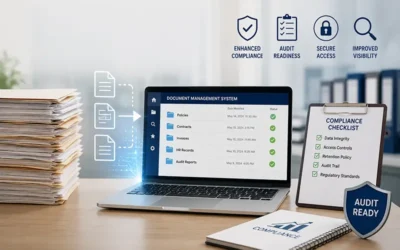
As mining projects become bigger and more complex, industries in this sector will have to handle huge volumes of data. Digitization of critical data is important for the organization to manage all communication efficiently, ensure safe storage of the information, and effortlessly connect with employees. Just as it is important to have the right leaders with the right vision at the helm, it is vital for entities in the mining and metals industry to utilize the right outsourced solutions. This would facilitate quick access to the data required for making critical decisions and provide improved visibility, control of information and also prevent loss of important data.
To conclude, the importance of vision in digital transformation is emphasized by Gartner as well. They stress the fact that enterprises should create an industry vision for digital business success which requires CIOs to re-imagine concept, capabilities, assets and research. According to Gartner’s 2016 CIO Agenda, executives expect 41% of enterprise revenue to come from digital business by the year 2020. This is almost double of what it was in 2015.