Genealogy, the study of family origins and history, helps us keep track of important family information. Genealogy records such as birth certificates, letters, photographs, newspaper clippings, diaries, and handwritten notes capture the stories, relationships, and events that shaped earlier generations. Yet many of these irreplaceable records are vulnerable to fading, physical damage, accidental loss, and even outdated digital storage media.
Preserving genealogy documentsand images requires more than simply storing them in a box or folder. A long-term strategy combines physical storage, organized digitization, and reliable digital backups while making them easier to locate and share. As scanning and archival technologies continue to improve, families can digitize and preserve these documents with the help of professional document digitization services.
Whether you are maintaining a small personal collection or managing decades of family records, building a well-organized digitization system ensures that valuable historical information remains accessible for future generations.
Why Is It Important to Preserve Genealogy Documents and Images?
Preserving genealogy documents and images protects family history from deterioration, accidental loss, and changing technology. A thoughtful preservation strategy safeguards original records while making them easier to organize, access, and pass on to future generations.
- Protecting Family History for Future Generations
Genealogy records provide a direct connection to people, places, and events that shaped a family’s story. Documents such as birth and marriage certificates, military records, letters, diaries, and family photographs help preserve details that may otherwise be forgotten over time. Maintaining these records creates a lasting archive that future generations can continue to build upon.
- Preventing Damage from Aging, Light, Moisture, and Handling
Paper records and photographs naturally deteriorate as they age. Exposure to humidity, sunlight, dust, pests, and frequent handling can lead to fading, discoloration, tears, and irreversible damage. Proper storage practices, combined with the creation of high-quality digital copies, reduce the risk of losing valuable historical materials.
- Making Historical Records Easier to Access and Share
- Birth, Marriage, and Death Certificates: These records help establish family relationships, timelines, legal identities, and generational connections.
- Old Photographs: Family portraits, wedding photographs, vacation images, and historical snapshots preserve visual memories that may contain important historical details.
- Letters and Personal Diaries: Handwritten correspondence, journals, and diaries provide insight into family stories, traditions, locations, and personal experiences.
- Property, Military, and Census Records: Land records, military files, wills, and census data help trace ancestry, migration patterns, and historical events connected to a family.
- Newspaper Clippings and Historical Documents: Newspaper announcements, obituaries, and public notices help validate family events and historical references.
- Digital Files and Scanned Records: Modern genealogy collections may also include scanned PDFs, JPEG photographs, cloud-based archives, and digitally stored family trees.
- Sort records into categories such as photographs, certificates, letters, and newspaper clippings before scanning.
- Remove paper clips, staples, and loose fasteners carefully to avoid damaging older documents.
- Clean scanner surfaces with a soft, lint-free cloth to prevent dust or marks from appearing on scanned images.
- Examine fragile or torn items before scanning and handle them gently to avoid further deterioration.
- Scan most text documents at 300–600 DPI to capture clear details while keeping file sizes manageable.
- Scan valuable photographs at 600 DPI or higher when long-term archival quality is important.
- Save archival master copies in TIFF format to preserve image quality, while using JPEG files for sharing and everyday access.
- Store multi-page records and text-heavy collections as PDF or PDF/A files for easier organization and long-term compatibility.
- Scan documents and photographs in color whenever possible to preserve annotations, stamps, and other visual details.
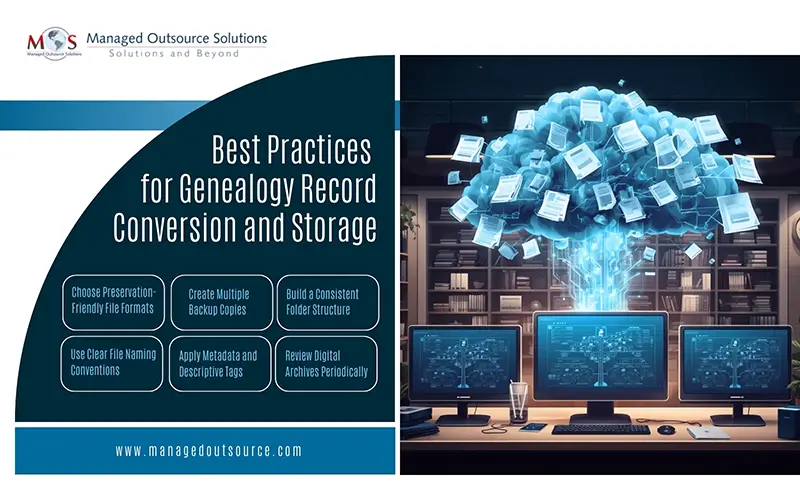
- Create a main folder for the family archives and organize subfolders by family branch, surname, location, and year.
- Use descriptive file names that include key details such as names, dates, or record types instead of generic numbers.
- Add captions or metadata to identify people, places, and events associated with each file.
- Keep related records grouped together to preserve context and simplify future research.
- Follow the 3-2-1 backup approach by maintaining three copies of your files across two different storage media, with one copy stored off-site.
- Save archives on external hard drives as well as secure cloud storage platforms.
- Review and test backups periodically to confirm that files remain accessible and free from corruption.
- Update backup collections whenever new genealogy records or photographs are added to the archive.
- Review and Update Digital Backups Regularly: Creating backups is only the first step; they should also be checked periodically to ensure files remain accessible and complete. Review backup copies after adding new records and confirm that storage devices and cloud accounts are functioning properly.
- Migrate Files to New Storage Formats: Digital storage media and file formats can become outdated over time, making older archives difficult to access. Transferring important genealogy collections to current storage platforms and widely supported file formats helps maintain long-term usability.
- Keep a Master Inventory of Physical and Digital Assets: Maintaining a central inventory makes it easier to track original documents, scanned copies, photographs, and related family records. A simple catalog that records file locations, descriptions, and dates can save significant time during future research or archive updates.
- Share Copies to Reduce Risk of Loss: Keeping genealogy records in a single location increases the risk of permanent loss if unexpected events occur. Sharing digital copies with trusted relatives or maintaining duplicate archives in separate locations adds another layer of protection while encouraging collaborative family history preservation.
- Long-term protection: High-quality digital copies help safeguard valuable records from deterioration, accidental damage, and unexpected disasters.
- Improved organization: Structured file naming, indexing, and metadata make it easier to locate specific records when needed.
- Better accessibility: Digital archives simplify sharing family history with relatives and researchers across different locations.
- Reduced handling of originals: Working from scanned copies helps preserve fragile documents and photographs by limiting physical contact.
- Reliable backup and recovery: Multiple storage options help reduce the risk of losing irreplaceable family records.
Well-preserved and organized collections simplify family research and collaboration. Digitized records can be securely stored, searched, and shared regardless of location, making it easier to exchange information and preserve multiple copies. This becomes particularly valuable for collections that include census records, newspaper clippings, scrapbooks, heirlooms, and other unique family archives.
/ol>
What Are the Different Types of Genealogy Documents and Images?
Genealogy records can exist in multiple physical and digital formats, each requiring careful handling and preservation.
Organizing these materials properly is the first step toward building an accessible and protected family archive.
How to Digitize Genealogy Documents
Creating digital copies of genealogy records is one of the most effective ways to protect family history from physical deterioration and loss. Digitization reduces the need to handle aging documents and photographs repeatedly, helping preserve their physical condition while creating an additional layer of protection against risks such as fire, flooding, mold, or other unexpected events that could damage original records.
Prepare Documents and Photos for Scanning
Proper preparation helps produce clear digital copies while protecting fragile materials during the scanning process.
Select Scanner Settings and File Formats
Choosing suitable scanning settings and file formats helps create digital copies that remain useful for years to come.
Organize and Name Digital Files
A consistent organizational system makes large genealogy collections easier to manage as they continue to grow.
Build Multiple Digital Backups
A single digital copy is not enough for long-term preservation. Hardware failures, accidental deletion, and cyber threats can still place valuable records at risk.
Best Practices for Long-Term Genealogy Preservation
Preserving genealogy records is an ongoing process rather than a one-time project. Best practices include:
As collections grow and technology evolves, a well-maintained preservation strategy helps keep both physical archives and digital files organized and secure for years to come.
Building a Lasting Digital Archive for Future Generations
A successful genealogy preservation strategy goes beyond protecting old papers and photographs. Combining careful physical storage with organized digitization helps families create archives that remain accessible, searchable, and easier to maintain as collections continue to grow.
Key advantages of a well-planned preservation approach include:
Preserving genealogy documents and images is an investment in protecting family history for future generations. As collections expand, managing fragile originals, large volumes of records, and digital archives can become increasingly complex. An experienced document scanning company can help simplify this process through high-quality digitization, organized digital file management, and secure archival practices, helping families preserve their historical records while ensuring they remain accessible for years to come.
Create a future-ready digital genealogy archive with our expert document scanning services.