
Business owners face constant pressure to manage daily operations while maintaining strong customer relationships. As organizations expand, they must organize and manage data properly. Data entry helps in the growth of business by transforming unorganized information into structured, usable insight. When businesses store data correctly, teams can retrieve it quickly for strategic decisions, customer follow-up activities, and future planning needs.
Many organizations still rely on paper-based systems that consume valuable time and create costly mistakes, but advanced solutions like Robotic Process Automation (RPA) ensure accurate and fast data capture.
Ready to Streamline Operations?
Partner with our experts for accurate data entry and processing
Call: (800) 670-2809.
How Data Entry Helps in the Growth of Business
Data serves as the foundation of every successful modern organization. When information moves through an organization in an organized manner, each department operates more effectively. The key improvements include:
- Sales departments track client leads with greater accuracy
- Finance departments identify patterns and trends faster
- Customer service departments resolve client concerns more quickly
This coordinated approach drives business growth. Data management and business efficiency both improve significantly when organizations consolidate their information in one location. Instead of searching through scattered files or email messages, team members locate required information within seconds. This approach saves numerous hours each week and reduces workplace frustration. Employees concentrate on higher-value work instead of spending time searching for necessary documents.
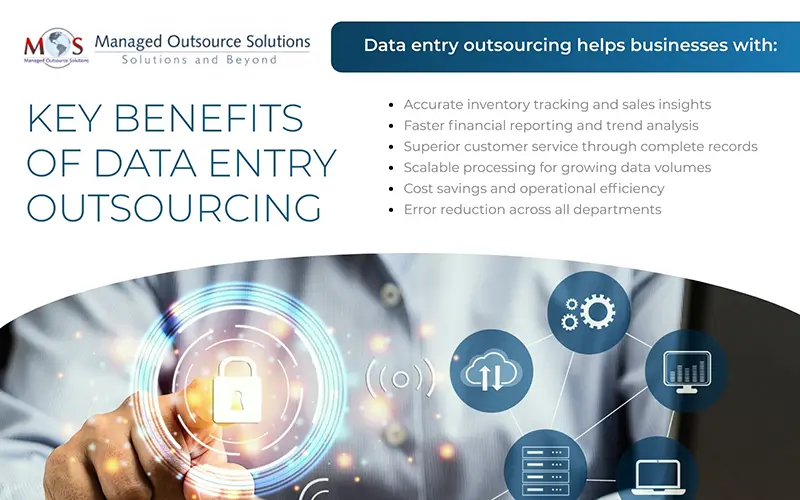
Why Data Entry Matters
Data entry involves much more than typing numbers into computer spreadsheets. It represents the essential process that enables an entire organization to function without interruption. When staff enter information accurately into the system from the start, all subsequent operations run smoothly and produce better results:
- Reports reflect true numbers
- Decisions rest on factual information
- Customers receive superior service because businesses truly understand their needs
The data entry process involves collecting information from many different sources including forms, email messages, receipts, and customer conversations, then organizing it in ways the business can use effectively. Manual handling of this work becomes tedious and frequently produces errors when busy staff members manage multiple responsibilities. One error can trigger problems that spread throughout an entire organization.
Data Management for Small Businesses
Small business operations typically work with limited financial resources. Many owners choose to reduce costs by personally handling data entry or using basic software programs like Excel and Word. However, this cost-saving approach creates bigger problems later.
When a small business owner dedicates ten hours each week to data processing, those same ten hours cannot go toward sales activities, product development, or building customer relationships. This represents lost business opportunity.
Proper data organization helps small business owners track inventory more accurately. When managers review which products customers purchase most frequently, they determine what inventory to keep stocked and what to gradually remove. This approach prevents wasting money on products that do not sell well. AI data entry technology now provides tools that small business owners can afford, automating routine work without stretching tight budgets.
Data Management for Large Enterprises
Large enterprises confront a distinct problem. They collect so much data that manual processing becomes a challenge. A large enterprise with thousands of customers, hundreds of daily transactions, and complicated supply chains struggles to manage information without dependable data management systems.
Their operational needs include:
- Maintaining client information with precision
- Tracking important dates and deadline requirements
- Completing transactions rapidly without making errors
- Ensuring customer service remains strong
When data entry fails in these large operations, customer service declines, business operations slow down, and financial losses occur. Professional service providers manage this complexity successfully. They use specialized software and trained workers to handle high volumes while maintaining accuracy.
The Real Business Impact
Accurate data produces better business decisions directly. When administrators possess clean, well-organized data, they recognize opportunities and problems more quickly. The benefits include:
- Pinpointing which customer groups generate the most profit
- Identifying which products or services need improvement
- Detecting patterns before competitors recognize them
This fact-based approach reduces spending. Organizations stop putting money into unsuccessful products or customers who generate low value. They commit resources to areas that show proven results. They avoid expensive mistakes because they base choices on actual information, not guesses.
Customer service also improves significantly. When staff members know a customer’s complete history, personal preferences, and previous problems, they deliver better service more rapidly. Customers feel understood and appreciated. They continue doing business with the company and recommend it to others.
The Outsourcing Advantage
Growing numbers of businesses now choose to outsource data entry activities. This choice allows internal workers to focus on activities that create higher value. A data entry company handles routine data processing while internal teams concentrate on business expansion.
Why Companies Outsource
Outsourcing data entry activities reduces both time requirements and costs. Workers who currently spend time on information processing could instead focus on:
- Sales activities
- Creating new products
- Improving existing offerings
Outside vendors possess infrastructure and specialized knowledge that in-house teams lack. Key vendor advantages include:
- Multiple team members ensure deadlines get met even when team members take time off
- Backup systems provide protection if technical problems develop
- Strict security protocols protect sensitive company information
Outsourcing also provides business flexibility. When data volume increases during busy seasons, vendors increase their staffing. When volume decreases, costs go down automatically.
Quality and Accuracy
Data entry professionals make fewer errors than busy employees managing multiple tasks simultaneously. When data entry represents someone’s complete job responsibility, they develop both speed and accuracy skills. They follow established procedures designed to catch and fix errors before information enters the system.
Service providers use multiple quality control steps:
- People at multiple levels review the completed work
- Computer systems flag inconsistencies
- Multiple quality checks guarantee accuracy that protects company interests
Security and Compliance
Data protection represents an increasingly critical concern. Customer information, financial records, and unique business information require strong security measures. Professional vendors invest in security systems that most small and medium-sized businesses cannot purchase independently.
They understand regulatory requirements. When companies work with healthcare data, financial records, or personal customer information, specific regulations apply. Vendors understand these legal rules and follow them consistently. This protects companies from legal consequences and financial penalties.
Market Growth and Trends
The data entry outsourcing market continues growing at a steady pace. More organizations recognize the value of outsourcing routine tasks that do not contribute directly to business growth. Research shows organizations will continue expanding data outsourcing services as they prioritize efficiency.
What Businesses Are Doing
Companies in many different industries now outsource data entry work. Examples across sectors include:
- Retail businesses outsource inventory information
- Healthcare organizations outsource patient documentation
- Financial companies outsource transaction records
- Nonprofit organizations outsource donor information
Each industry has unique needs. Retail companies need inventory tracking systems. Healthcare organizations need HIPAA compliance systems. Financial firms need accurate records and audit documentation. Professional vendors develop specialized expertise in these specific requirements and understand industry standards.
The Technology Shift
Technology continues making data processing more efficient. Modern technological tools include:
- Optical character recognition (OCR) technology reads printed documents and extracts information automatically
- RPA streamlines data entry by automatically capturing, transferring, and updating information across systems with speed and high accuracy, reducing manual workload and errors.
- Artificial intelligence recognizes patterns and fills in information with limited human assistance
- Integration software connects different computer programs so information transfers automatically
These technological advances change how data entry services are delivered. Modern data entry vendors combine automated systems with skilled human workers. Automated systems handle work that requires speed and consistency. Trained workers handle tasks that need judgment and careful analysis.
Real-World Benefits
Operational Efficiency
When information flows properly through an organization, business operations function more smoothly. Key improvements include:
- Inventory receives replenishment before supplies run out
- Customers receive accurate invoices on schedule
- Employee records stay current so payroll operations run without problems
- Suppliers receive correct order information
This operational smoothness saves money and prevents problems. Proper data entry prevents cascading issues that damage customer relationships and organizational efficiency.
Decision Making
Different managers depend on different types of accurate information. A retail manager selecting products to order needs inventory information. A marketing manager allocating budget needs sales data organized by category. An HR manager making hiring decisions needs staffing information. When information stays organized and accurate, decision-making improves and flows faster. Managers feel confident in the numbers and act decisively.
Customer Relationships
Customers recognize when businesses truly understand them. When a company remembers past conversations, understands individual preferences, and offers customized service, customers feel valued. This builds strong loyalty. Data entry enables this understanding by recording interactions, noting preferences, and building customer profiles that improve service delivery.
Growth Opportunities
Accurate data reveals new business opportunities. A business might discover that a product line serves an unexpected market segment, a service appeals to a geographic region previously untapped, or a customer category produces higher lifetime value than previously believed. This approach explains why data-driven companies grow faster than competitors.
Build Success through Data Accuracy
As businesses grow, managing information becomes increasingly complex and critical. Professional support makes the difference between struggling with disorder and operating with clarity.
Organizations that succeed understand that data represents an essential business asset. They commit resources to proper data entry and management. They base decisions on accurate information. They develop detailed understanding of customers and operations. Organizations that prioritize data accuracy and management build competitive advantages that drive measurable growth and sustained success.